How to Fix a Sticking Door (and Stop It Sticking Again)
It starts small. The bedroom door needs a little shoulder to close. Then it scrapes. Then one morning it will not latch at all — and in Green Bay, where summers are humid and winters are heated dry, sticking doors are one of the most common little repairs in the house.
The good news: most sticking doors are not really a door problem. They are a hinge problem, a humidity problem, or a small alignment problem — and the fix is usually simpler than people expect. Here is how to find the real cause first, then fix it in the right order, easiest first.
Quick Answer
Most doors stick for one of three reasons: loose hinge screws letting the door sag, humidity swelling the wood in summer, or a frame that has shifted slightly as the house settled. Start with the hinges — tighten every screw, and if the top hinge screws spin or feel loose, replace one with a longer screw that bites into the wall stud and pulls the door back into line. If the door still rubs, find the exact rub spot and sand only that edge, then seal it. If the gaps around the door are uneven everywhere or you see cracks above the frame, the problem is bigger than the door — call a professional.
First, Find Out Why Your Door Is Sticking
Two minutes of detective work saves an hour of wrong fixes:
- Check the gaps. Close the door and look at the gap around it. An even gap all around, with rubbing on one edge, usually means swollen wood. A gap that is wide at the bottom and tight at the top (or the reverse) means the door is sagging on its hinges or the frame has shifted.
- Find the rub spot. Look for shiny, worn, or cracked paint on the door edge and frame — that is where contact happens. No worn spot? Rub a little chalk along the latch edge, close the door once, and the chalk will mark exactly where it touches.
- Notice the season. A door that sticks every humid summer and behaves all winter is swallowing moisture. A door that sticks all year, or gets steadily worse, is hinges or movement — not weather.
Fix 1: Tighten the Hinges (This Solves Most Sticking Doors)
Doors are heavy, and hinge screws take the strain every single swing. Over years they work loose, the door sags a fraction, and the top corner starts to rub.
- Open the door and support it (a folded magazine under the edge works).
- Tighten every hinge screw — the ones in the door and the ones in the frame.
- If a screw spins without biting, the hole is stripped. Two real fixes: drive a longer screw (about 3 inches) through the top hinge into the stud behind the frame — this physically pulls the door back toward the frame — or fill the old hole with a glued wooden golf tee or toothpicks, let it dry, and re-drive the screw.
Test the swing after each step. A surprising number of sticking doors end right here.
Fix 2: The Latch and Strike Plate
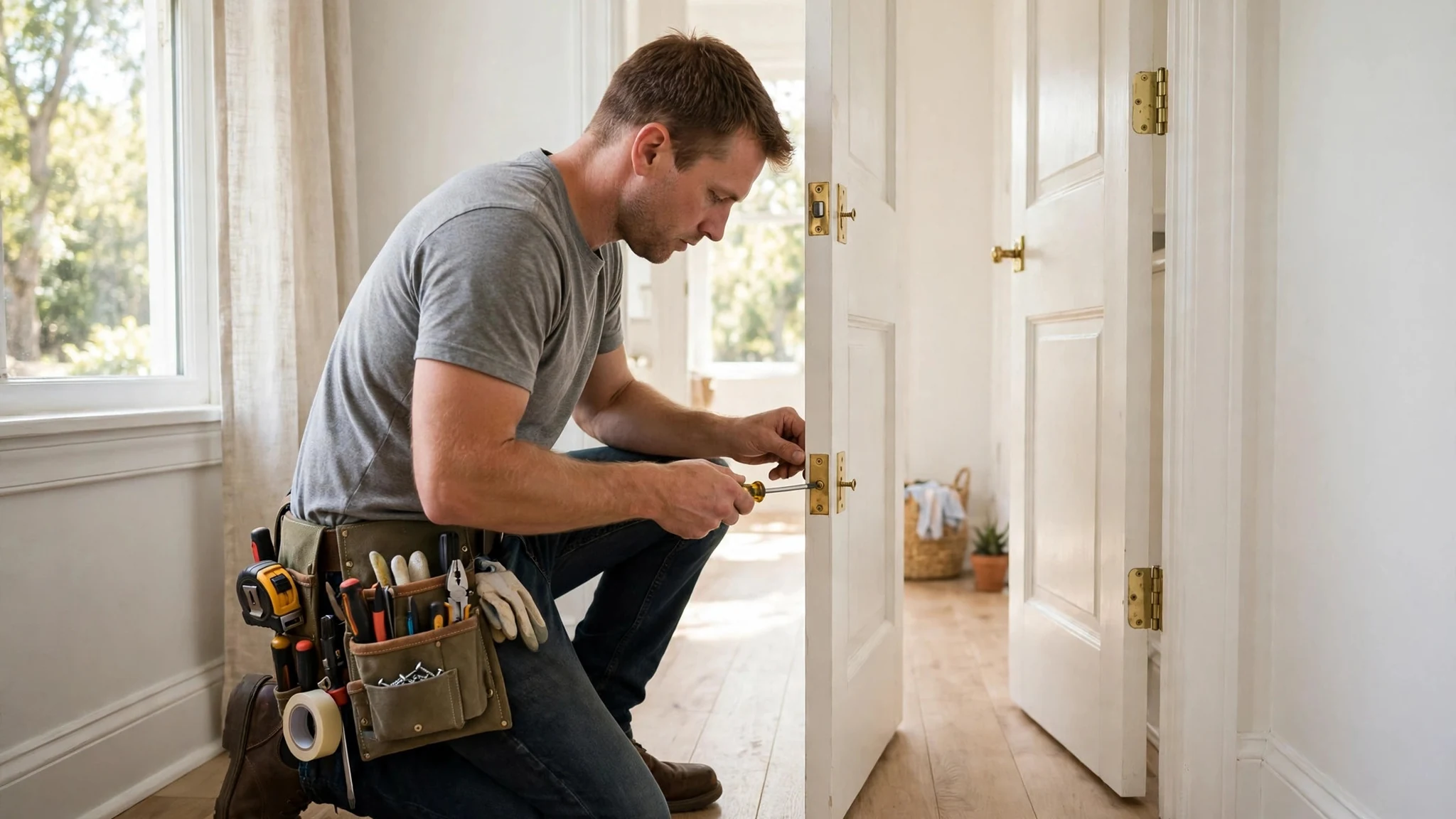
If the door closes into the frame fine but the latch misses, clicks, or you have to lift the handle to make it catch, the door is not the problem — the latch alignment is. Check that the latch bolt meets the strike plate cleanly. Tighten the plate’s screws; if it is off by a little, the plate can be adjusted or its opening filed slightly so the bolt drops in. A door that latches smoothly also stops rattling and seals better against drafts.
Fix 3: Sand or Plane the Rub Spot — Only Where It Rubs
If the hinges are tight and the door still rubs, remove material — carefully, and only at the marked spot:
- For a small rub, a sanding block with coarse, then finer, paper is enough, often without taking the door down.
- For a bigger rub, a hand plane takes off controlled shavings; check the fit after every few passes. You can always remove more — you cannot put wood back.
- Always seal the bare edge afterward with paint or finish. Unsealed wood is a sponge: it drinks the next humid summer and swells right back. This one step is the difference between a permanent fix and a seasonal ritual.
Why Doors Stick So Much in Wisconsin Homes
Green Bay homes live a double life. Summer humidity swells wood doors and frames. Winter heating dries the same wood until it shrinks. Freeze-thaw cycles and a little natural settling nudge frames a fraction out of square year after year — and in the city’s older homes, a century of seasons adds up. A door that sticks a little every July and frees itself every January is mostly weather. A door that sticks harder every year is telling you something is moving — that is the one to fix properly.
Sliding Doors That Stick
Sliding doors usually stick for duller reasons: grit packed into the track, worn or dirty rollers, or a door that has hopped slightly out of adjustment. Vacuum and scrub the track first, check that the rollers roll, and lubricate the track lightly. If the door still drags or the frame itself is damaged, that is a repair visit rather than a cleaning one.
When to Call a Pro Instead
- The hinge fixes did not change anything and the frame is visibly out of square.
- The door sticks and cracks have appeared in the wall above the frame, or several doors in the house started sticking around the same time — that pattern deserves a professional look.
- The rub needs more than a light sanding, especially on a solid or exterior door you cannot afford to get wrong.
- It is an exterior door that also lets in drafts — the fix may involve the frame and weatherstripping together, like the work on our door installation and repair in Green Bay page.